Author: Chris

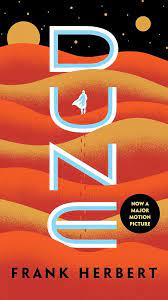
  • Dune: Full Series Review

    Dune: Full Series Review

    This post provides a comprehensive look at Frank Herbert’s original Dune series, exploring its structure, summarizing each novel, and reflecting on what makes his work a lasting cornerstone of science fiction. 

    Focusing solely on the six books Herbert wrote before his death in 1986, we’ll highlight the themes, characters, and world-building that define the series.

    (more…)
  • The Dune Timeline Explained

    The Dune Timeline Explained

    The Dune universe stretches across more than 30,000 years of intricate future history, making it one of the most expansive worlds in science fiction. To help make sense of it all, fans divide the timeline into six major eras. 

    In this guide, we break down each era so that newcomers and longtime readers alike can understand how the events of Dune fit together.

    (more…)
  • A Beginner’s Guide To The Dune Universe

    A Beginner’s Guide To The Dune Universe

    Frank Herbert’s Dune is one of the most influential science fiction novels ever written, earning both the Hugo and Nebula Awards and inspiring countless creators across media. Its legacy spans films, video games, board games, and even influenced George Lucas when he created Star Wars. 

    Beyond its cultural impact, Dune stands out for its intricate world-building and complex exploration of ecology, religion, politics, and human evolution, making it a timeless masterpiece for readers and fans of science fiction alike.

    (more…)
  • The Best Dune Quotes

    The Best Dune Quotes

    ​​​​Frank Herbert’s Dune is celebrated as one of the greatest science fiction novels of all time, earning both the Hugo and Nebula Award. Beyond its epic world-building and complex characters, the series is packed with unforgettable lines that capture its wisdom. In this post, we’ve collected some of the best quotes from the Dune saga.

    (more…)
  • Mastering Jujitsu by Renzo Gracie and John Danaher

    Mastering Jujitsu by Renzo Gracie and John Danaher

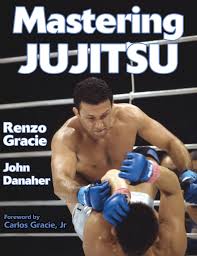
    Mastering Jujitsu by Renzo Gracie and John Danaher breaks down Brazilian Jiu-Jitsu into its core principles, showing how technique, timing, and leverage outweigh brute strength. They explore the mental and strategic aspects of the martial art, emphasizing adaptability, patience, and decision-making under pressure. The book provides both a technical framework and a philosophical approach for developing skill on and off the mat.

    (more…)
  • The Dispossessed by Ursula K. Le Guin

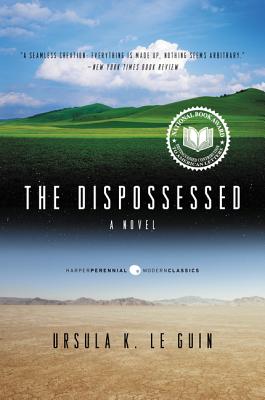
    The Dispossessed by Ursula K. Le Guin

    Ursula K. Le Guin is one of the greatest science fiction writers of all time. Her most famous work, The Left Hand of Darkness, is fantastic and appears on my list of Best Science Fiction Books, but I also want to give a shout-out to The Dispossessed. It’s one of the only books to win all three of the biggest sci-fi awards — the Hugo, Locus, and Nebula.

    Shevek, a brilliant physicist from the barren planet Anarres, is preparing to leave for the first time. Anarres is a utopian society founded on anarchist principles, in sharp contrast to the capitalist world of its twin planet, Urras. While Shevek is committed to Anarres’ ideals of equality and communal living, he feels stifled by its lack of intellectual freedom.

    Upon arriving on Urras, he is dazzled by the planet’s beauty and wealth, but quickly troubled by its extreme social inequalities. A wealthy elite controls most of the resources, while the working class struggles in poverty. Shevek also discovers that the intellectual freedom he sought is compromised, as his scientific work is being manipulated for the ruling powers’ gain. The novel alternates between Shevek’s past on Anarres and his experiences on Urras, highlighting the stark contrasts between these two different societies.

    As Le Guin so often does, she uses an imaginative universe to examine political philosophy and economic systems, in this case anarchism and capitalism. Anarchists argue that most forms of government are inherently oppressive, concentrating power in the hands of a few, and instead advocate mutual aid, voluntary cooperation, and self-managed communities. Depicting a true anarchist society is difficult, since it must be deeply embedded in the culture to function, but Le Guin accomplishes this better than anyone I have read, alongside The Moon is a Harsh Mistress. By presenting both Anarres and Urras, she makes it clear that no system is without flaws.

    The plot isn’t exactly edge-of-your-seat thrilling, but it’s engaging enough with the detailed world-building and Shevek’s funny cultural mishaps. Urras feels familiar enough to modern Earth to keep you interested — it’s easy to imagine it as a future history of our planet.

    I was actually surprised to like The Dispossessed more than Le Guin’s most famous (and still excellent) novel, The Left Hand of Darkness. I think the themes are a bit clearer for newcomers to the genre, partly because it’s closer to our modern world. Overall, Le Guin does what she does best: weaves philosophical ideas into science fiction, using it to explore lasting human traits without relying solely on technology. 

    I’d recommend The Dispossessed to anyone who enjoys intellectual sci-fi that focuses on societal structure, values, and governance. If you liked The Moon Is a Harsh Mistress or Brave New World, this is up your alley.

  • Zen Mind, Beginner’s Mind by Shunryu Suzuki

    Zen Mind, Beginner’s Mind by Shunryu Suzuki

    Zen Mind, Beginner’s Mind by Shunryu Suzuki presents Zen practice as a way of approaching life with openness, curiosity, and presence. He emphasizes maintaining a “beginner’s mind,” free from preconceptions, to fully experience each moment. Through reflections on meditation, posture, and mindset, the book shows how simplicity and awareness can transform daily life.

    (more…)
  • Can’t Hurt Me by David Goggins

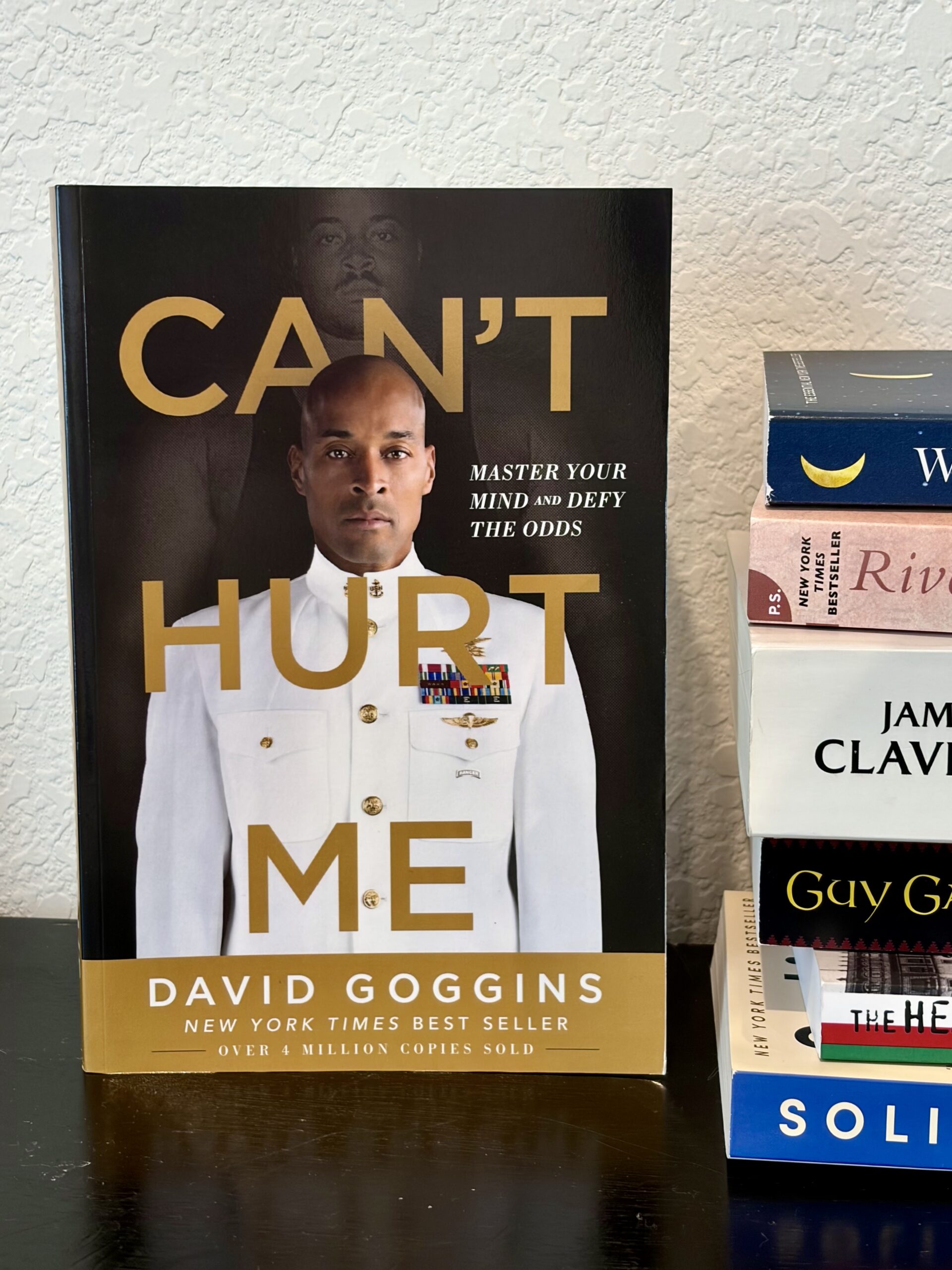
    Can’t Hurt Me by David Goggins

    David Goggins is a former Navy SEAL, ultramarathon runner, and motivational speaker. He stepped out of his comfort zone by writing a memoir, Can’t Hurt Me, reading more like a personal survival story than a traditional self-help book.

    The book begins with Goggins’s childhood, marked by abuse, poverty, and constant fear, which leaves him angry, insecure, and emotionally shut down. As an adult, he drifts into a dead-end life — overweight, directionless, and numbing himself with comfort — until he hits a breaking point watching Navy SEALs on TV and realizing how far he’s fallen from his potential.

    What follows is a cycle: Goggins sets an extreme goal, fails painfully, adapts through brutal self-discipline, and then raises the bar again. He endures SEAL training despite repeated injuries, tackles Army Ranger School and ultramarathons, and deliberately seeks suffering as a way to harden his mind.

    Every nonfiction book has a core message, and to me, that’s what determines whether a book is “good.” Writing style, real-world examples, or personality can’t save a weak idea, but a strong, applicable message on its own can make a book worth reading. For example:

    The Let Them Theory — Peace and control come from letting others make their own choices.

    The Slight Edge — Small daily actions compound over time, putting your life on an upward or downward trajectory. 

    Why We Sleep — Sleep is vital and must be protected.

    Range — Exploring broadly builds adaptable skills that lead to long-term success.

    Here’s the takeaway from Can’t Hurt Me: your mind quits long before your body does, and real growth comes from embracing discomfort, taking responsibility, and doing hard things daily. Goggins calls it “callusing” your mind — training it to face difficult things so that when challenges inevitably come, you’re ready.

    That said, Goggins definitely pushes past what most consider reasonable. He leans heavily on the idea that mental strength alone can carry you and the body will catch up. He’s backed this by running 100 miles with almost no training, completing Navy SEAL Hell Week three times, and doing over 4,000 pull-ups in 17 hours… but all of it came with a long trail of injuries. Your body does have limits, and sometimes the best way to reach a goal is gradually, not by blasting straight through.

    Still, more people could benefit from this mindset. The core message is repeated across many self-help books: don’t make excuses for your circumstances, whether mental, physical, or professional, just get after it.

    Goggins is polarizing, intense, and unapologetic, but that’s what works for him, and what makes the book a wake-up call rather than a comfort read. He uses profanity and tough love, so don’t expect a gentle self-help voice. The writing itself isn’t remarkable; he admits that this was out of his comfort zone and hard work for him.

    I wouldn’t pick up the book for style, and some ideas need a grain of salt, but the core message is important, especially today. It reminds me of a quote by the ruler of Dubai: 

    “My grandfather rode a camel, my father rode a camel, I drive a Mercedes, my son drives a Land Rover, my grandson will drive a Land Rover, but my great-grandson will ride a camel.”

    When asked why, he explained:

    “Hard times create strong men, strong men create good times. Good times create weak men, weak men create hard times.”
  • The Road Back To You by Ian Morgan Cron & Suzanne Stabile

    The Road Back To You by Ian Morgan Cron & Suzanne Stabile

    The Road Back To You by Ian Morgan Cron and Suzanne Stabile introduce the Enneagram as a tool for understanding personality and uncovering patterns that shape behavior, relationships, and personal growth. They explain how each of the nine types perceives the world, responds to stress, and interacts with others. The book emphasizes self-awareness and compassion as keys to deeper connection and meaningful change.

    (more…)
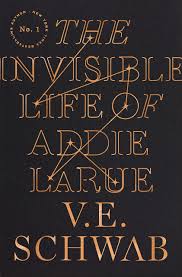
  • The Invisible Life of Addie LaRue by V.E. Schwab

    The Invisible Life of Addie LaRue by V.E. Schwab

    I saw this book everywhere for years. There were multiple times I was waiting for Tindol in Target and I’d pick it up just to read the first few pages and see how it started (I swear, the only good book they ever had). I’m usually wary of books with a massive marketing machine behind them, especially expensive hardbacks, but I eventually got around to reading The Invisible Life of Addie LaRue, and it didn’t disappoint.

    The story opens in 1714 in rural France, where Addie is a free-spirited young girl who loves tagging along with her father to the market. As social expectations close in and her independence narrows, she’s pushed toward an arranged marriage she doesn’t want. Around this time, the village widow Estelle introduces her to the “old gods,” warning her never to pray to the ones who answer after dark.

    On her wedding day, Addie runs. Desperate for more time and a life that belongs only to herself, she finally calls out — and someone answers. Knowing she’s breaking Estelle’s warning, Addie makes a fateful deal to escape, waking up immortal but cursed: no one she meets will ever remember her.

    The novel moves between present-day New York City and flashbacks across centuries, following Addie as she navigates loneliness, survival, and identity — until one day, someone recognizes her, and everything changes.

    Throughout history, humans have been obsessed with immortality. Ancient civilizations like the Egyptians chased it through burial rituals and body preservation, believing the soul would continue on in the afterlife, while myths like the Fountain of Youth or Elixir of Life captured the hope of escaping death altogether. At the same time, people have pursued a more metaphorical immortality through their legacy, leaving something behind that long outlives them. Artists, writers, and thinkers have shaped generations long after they’re gone, and figures like Martin Luther King Jr. continue to inspire movements decades later.

    Addie’s curse raises a question: if someone can’t leave a mark on the world, if no one remembers them and their work erases itself, do they even exist? Sometimes the book suggests no, other times yes. More than anything, you think about how much of being human is tied to being remembered, and how fragile that really is.

    A secondary theme I really enjoyed is the question of identity. Addie’s curse strips away any sense of self that others can affirm — no one knows her! — forcing her to look inside to define who she is.

    The antagonist (you’ll know who when you read) adds another layer of complexity. He represents a typical Faustian bargain: the temptation of getting everything you want, but at a steep, often unseen cost.

    It’s been a while since I read this, so I don’t remember the writing style in exact detail, but even at around 450 pages, I never felt like it dragged or became too dense. That said, it’s not a plot-heavy book, and I can see how some people might DNF it if they’re looking for constant momentum.

    It feels very modern and easy to read, but it’s slow, introspective, and character-driven. The payoff is more emotional — the loneliness Addie feels seeps into the reader. I’ve seen comparisons to The Night Circus and The Midnight Library, and while the tone is similar, Addie LaRue’s longer length gives it room to develop and feel a bit more impactful.

    The setting blends historical fiction with subtle, “soft” fantasy. The magical elements are understated, keeping the focus on Addie and the philosophical questions at the heart of the story. She travels from 18th-century France to 19th-century Italy to modern-day New York City, and each setting complements the story rather than steals the spotlight.

    In the end, Addie LaRue suggests that immortality isn’t about living forever, but about how deeply we touch other lives. That idea, and the emotions it leaves you with, is what makes the book memorable more than any single plot point.

  • How I Invest My Money by Joshua Brown and Brian Portnoy

    How I Invest My Money by Joshua Brown and Brian Portnoy brings together financial professionals who set aside theory to explain how they actually handle their own money. Instead of offering universal formulas, each essay reveals the personal values and lived experiences that shape real-world financial decisions. Together, the stories show that money management is less about strategy and more about aligning resources with what matters most.

    (more…)
  • Travel as Transformation by Gregory V. Diehl

    I relate to many of the ideas in Travel as Transformation and have experienced them firsthand while living with host families in Peru and Mexico. It aligns with a recurring theme on my nonfiction review list: avoiding the default and consciously designing your life.

    Diehl explores how societal values aren’t universal truths — they’re shaped by the people within and reinforced until they become “culture.” From a young age, we absorb the beliefs, fears, and assumptions of previous generations, and over time, these quietly shape how we see the world. The longer we live with them, the harder they are to question.

    Travel has a way of breaking that autopilot. Things you assumed were obvious, from greetings among friends to restaurant etiquette, suddenly aren’t. You start noticing your own biases and how much of what we “knew” came from secondhand sources. As the title suggests, travel is an opportunity to rethink who you are once those old boundaries start to fall away:

    “You will feel lost for a time without a solid category to belong to. Don’t let that fool you into choosing a premature identity. There is no single way to be a traveler, an artist, a scholar, a superhero, or a philosopher. You accept other people’s definitions when you are too weak to make your own.”

    I feel similarly towards reading. Another book explained that there are two ways to encounter new perspectives: firsthand, like through travel, or vicariously, through books. Even the most imaginative are grounded in real-world truths; novels like To Kill a Mockingbird or The Jungle immerse you in the lived experiences of racial injustice and labor exploitation.

    Diehl’s ideas are mirrored in many other books I’ve covered on the blog. Range explains how people who take time to explore often end up with greater personal satisfaction. That clarity helps them choose jobs that truly fit, which in turn boosts motivation, productivity, and ultimately income. So even if exploration costs time and money upfront, it can lead to higher happiness and greater financial success in the long run.

    The book is fairly short — about 160 pages — and doesn’t include the kinds of travel anecdotes you might expect. It’s more of a reflective essay, with little plot. To be completely honest, I wouldn’t pick it up for the writing; its value is in the ideas.

    Diehl has written several books across a wide range of topics that interest him. He currently lives in Armenia, where he runs an educational NGO called The Kalavan Retreat Center.

    Here’s my notes on the book.

  • Turn Right At Machu Picchu by Mark Adams

    Turn Right at Machu Picchu by Mark Adams retraces the journey of explorer Hiram Bingham to uncover the story behind the rediscovery of Machu Picchu. He blends adventure, history, and archaeology to show how luck and exploitation shaped the site’s modern fame. Through humor and detailed research, Adams illuminates both the mountain ruins and the people who brought them into the world’s imagination.

    (more…)
  • Alamut by Vladimir Bartol

    Although it was first published in Slovenian in 1938, Alamut gained renewed popularity after the September 11 attacks, as its themes felt increasingly relevant to modern terrorism. One of its most widely quoted and defining lines — later inspiring films and video games like Assassin’s Creed — is, “Nothing is an absolute reality; all is permitted.”

    Set in 11th-century Persia, Alamut centers on the mountain fortress of the same name and its leader, Hassan-i Sabbah. Through deception, manipulation, and carefully staged illusions, Hassan maintains absolute control over his followers, molding them into fearless assassins who believe their obedience will grant them eternal paradise. Young recruits are drawn into a world where pleasure and terror are tightly intertwined, making it nearly impossible to distinguish truth from illusion. Within the fortress walls, reality itself becomes a weapon.

    Inspired by the rise of totalitarian regimes in 1930s Europe, Bartol explores how people can control others through ideology, fear, and deception. The novel demonstrates how some can be driven to commit acts unquestioningly when convinced they serve a higher purpose. While the novel is loosely based on historical events — Hassan-i Sabbah was a real figure, and the fortress truly existed — most of the plot is fictionalized.

    The novel does offer glimpses of daily life in Persia, but it doesn’t dive as deeply into worldbuilding as other historical fiction books like Shōgun. Instead, much of the narrative is introspective, exploring the motivations of Hassan and his followers rather than relying on nonstop action. Its length, philosophical depth, and formal language can make the pacing feel slow, but the sense of looming danger creates a tension that stays with the reader — especially since we’ve seen the real-world consequences of such blind faith.

    Even nearly a century after it was written, the story still feels relevant. In today’s highly politicized society, with social media echo chambers and constant information bombardment, it reminds us to question belief in any person, group, or ideology. As On Tyranny points out, most people know the end manifestations of authoritarianism — like Nazi Germany — but few study how it creeps in slowly, day by day, through small, almost imperceptible steps.

    I enjoyed Alamut; I wouldn’t call it one of my favorites, but its exploration of manipulation is compelling. By showing what can happen when people live in a bubble and accept ideas without question, the novel’s message is clear: expose yourself to different perspectives and be wary of blind belief. Otherwise you might end up accepting something without the full picture, much like in Plato’s Allegory of the Cave. It’s ironic that Iran has banned Alamut over alleged links to terror, when the entire book is a warning against the illusions leaders use to manipulate people into acts of terror. As others like Reading Lolita in Tehran show, books remain one of the best ways to challenge narrow thinking and expand perspective.

  • The Hidden Habits Of Genius by Craig Wright

    The Hidden Habits Of Genius by Craig Wright examines the daily routines, mindsets, and practices that have allowed extraordinary thinkers to create groundbreaking work. He highlights habits related to focus, curiosity, persistence, and the ways these individuals structure their time and environment. The book shows that genius is often less about innate talent and more about disciplined, consistent practice.

    (more…)
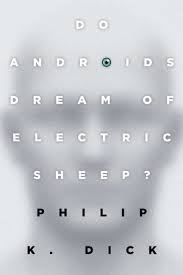
  • Do Androids Dream Of Electric Sheep? by Philip K. Dick

    Do Androids Dream Of Electric Sheep? by Philip K. Dick

    Do Androids Dream of Electric Sheep? is one of fiction’s most thought-provoking explorations of humanity. Beyond imagining artificial intelligence more than five decades before ChatGPT, it grapples with what it truly means to be human.

    After a devastating nuclear war, Earth has deteriorated into a barren wasteland, pushing humanity to seek refuge on other planets. In this bleak future, even owning a live animal has become a rare and coveted status symbol. To encourage emigration, governments offer people a free personal android — an advanced robot indistinguishable from a human.

    Some androids, however, escape back to Earth, hoping to live undetected. Law enforcement responds by hiring bounty hunters to “retire” (destroy) these rogues, even though most are nonviolent.

    Rick Deckard, a bounty hunter with the San Francisco Police Department, is tasked with retiring six escaped androids that have evolved to the point where distinguishing them from humans is nearly impossible — certainty comes only after death. As Deckard hunts, the boundary between human and machine begins to blur.

    I’ve said it before, and I’ll keep saying it: science fiction is one of the best genres for exploring deep themes and Do Androids Dream of Electric Sheep? is a great example. Dick’s story raises a central question: what does it mean to be human? How do we distinguish ourselves? In the novel, characters believe empathy is the key, but ironically, humans act far more ruthlessly than the androids. 

    With the rise of artificial intelligence, these questions feel more urgent than ever. If we one day create androids that act indistinguishable from humans, how will we treat them? Will they be seen as equals or slaves? Or, because they don’t fit our current definitions of “human,” would they be considered neither? These are questions science fiction helps explore long before the technology actually arrives.

    The book feels stylistically different from popular novels today. The plot is engaging enough to keep you immersed, but you often walk away thinking more about the ideas and themes than the characters themselves. I feel that’s different from many modern books, which push you to emotionally latch onto characters in order to stay hooked.

    I’d still rank it among the most important science fiction novels ever published, alongside classics like 1984, Brave New World, and others you can find HERE. If you’re not in the mood to read, the movies Blade Runner and Blade Runner 2049 are based on Do Androids Dream of Electric Sheep? — though I haven’t seen either myself.

  • 168 Hours by Laura Vanderkam

    168 Hours by Laura Vanderkam examines how people use the same 168 hours each week, revealing that time is often spent on autopilot rather than priorities. She offers strategies for identifying what matters most and restructuring schedules to focus on meaningful work, relationships, and personal growth. Through examples and practical tips, the book shows that small changes in time management can create significant improvements in life.

    (more…)
  • Under The Black Flag by David Cordingly

    Under the Black Flag by David Cordingly delves into the history of piracy, revealing the lives, motivations, and codes that shaped these infamous seafarers. He separates myth from reality, showing that pirates were complex figures driven by economic opportunity, rebellion, and survival. Through vivid storytelling, he brings the Golden Age of Piracy to life while exploring its enduring cultural impact.

    (more…)
  • The Book of Joy by Douglas Abrams

    The Book of Joy by Douglas Abrams captures conversations between the Dalai Lama and Desmond Tutu on how to cultivate joy despite life’s inevitable suffering. The book explores the habits, attitudes, and perspectives that allow these spiritual leaders to maintain resilience and compassion. Through stories and reflections, it shows that joy is a practice that can be developed by anyone.

    (more…)
  • Know Yourself Know Your Money by Rachel Cruze

    Know Yourself, Know Your Money by Rachel Cruze explores how your financial habits stem from deeper money beliefs formed by upbringing, emotions, and personal experiences. She shows how identifying these patterns can reduce anxiety, improve communication, and create more intentional decisions. By pairing insights with practical steps, she lays out a path for building healthier behaviors that support long-term financial stability.

    (more…)
  • How To Travel The World On $50 A Day by Matt Kepnes

    How to Travel the World on $50 a Day by Nomadic Matt shares strategies for seeing the world on a tight budget without sacrificing experiences. He covers transportation, lodging, food, and activities, showing how careful planning and creativity can stretch every dollar. Through tips and real-world examples, he demonstrates that traveling widely is possible even on limited funds.

    (more…)
  • How to Save the World for Just a Trillion Dollars by Rowan Hooper

    How to Save the World for Just a Trillion Dollars by Rowan Hooper imagines what could be achieved if a trillion dollars were spent on solving the world’s biggest challenges. He explores strategies to combat poverty, disease, climate change, and biodiversity loss, combining research with cost estimates. The book shows that tackling global crises isn’t just idealistic – it could be financially within reach.

    (more…)
  • The Simple Path to Wealth by JL Collins

    The Simple Path to Wealth by JL Collins gives a clear strategy for achieving financial independence with minimal complexity, focusing on saving and low-cost index funds. He emphasizes avoiding debt, letting investments grow over time, and maintaining a long-term perspective free from market panic. By combining advice with straightforward explanations, he shows how ordinary investors can steadily build freedom.

    (more…)
  • Take More Vacations by Scott Keyes

    Take More Vacations by flight expert Scott Keyes argues that regular vacations aren’t just enjoyable – they are essential for health, happiness, and productivity. He provides advice for finding affordable travel options, planning trips efficiently, and making time away from work a priority. By blending research with actionable strategies, he shows how travel can enrich life without breaking the bank.

    (more…)
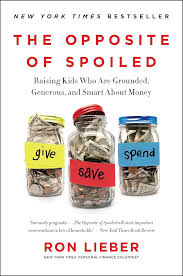
  • The Opposite of Spoiled by Ron Lieber

    The Opposite of Spoiled by Ron Lieber

    The Opposite of Spoiled by Ron Lieber explores how parents can teach children to develop a healthy, balanced relationship with money. He argues that guiding kids to understand earning, saving, and spending fosters gratitude, responsibility, and long-term financial literacy. Through research, anecdotes, and advice, he shows that financial lessons are as much about values as they are about dollars.

    (more…)
  • Bird by Bird by Anne Lamott

    Bird by Bird by Anne Lamott offers an honest, humorous take on the writing process, from overcoming self-doubt to embracing imperfection. She blends advice with personal anecdotes to show that writing is as much about perseverance and honesty as technique. The book encourages writers to approach their work one bird at a time, finding creativity in the process.

    (more…)
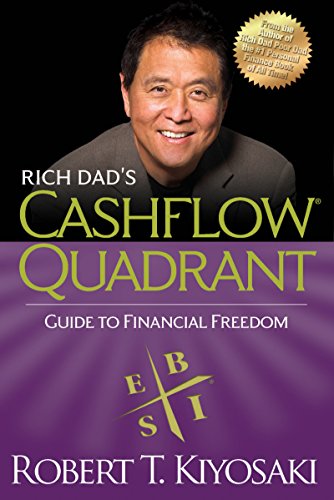
  • Cashflow Quadrant by Robert Kiyosaki

    Cashflow Quadrant by Robert Kiyosaki

    Rich Dad’s Cashflow Quadrant by Robert Kiyosaki explains how four quadrants – Employee, Self-Employed, Business Owner, and Investor – represent fundamentally different paths for building wealth. He argues that financial freedom comes from shifting away from trading time for money and toward owning scalable systems. Using clear contrasts, he shows how mindset and skillset changes are necessary to move from one quadrant to another.

    (more…)