hi, i’m chris.
who am i.
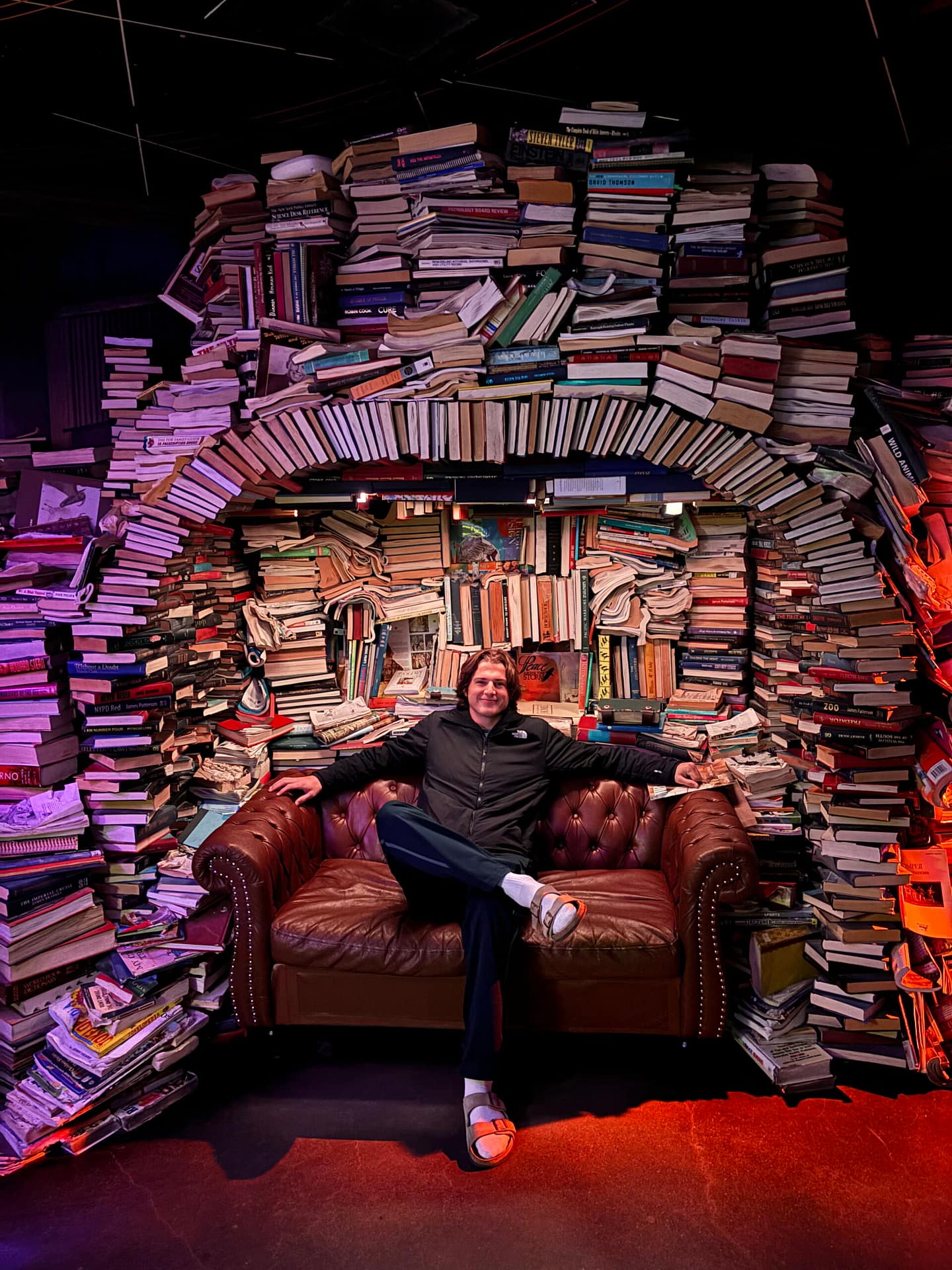
I’ve always bounced between a lot of interests — chess, languages, jiu-jitsu, cooking, travel — but books have been the constant through all of it.
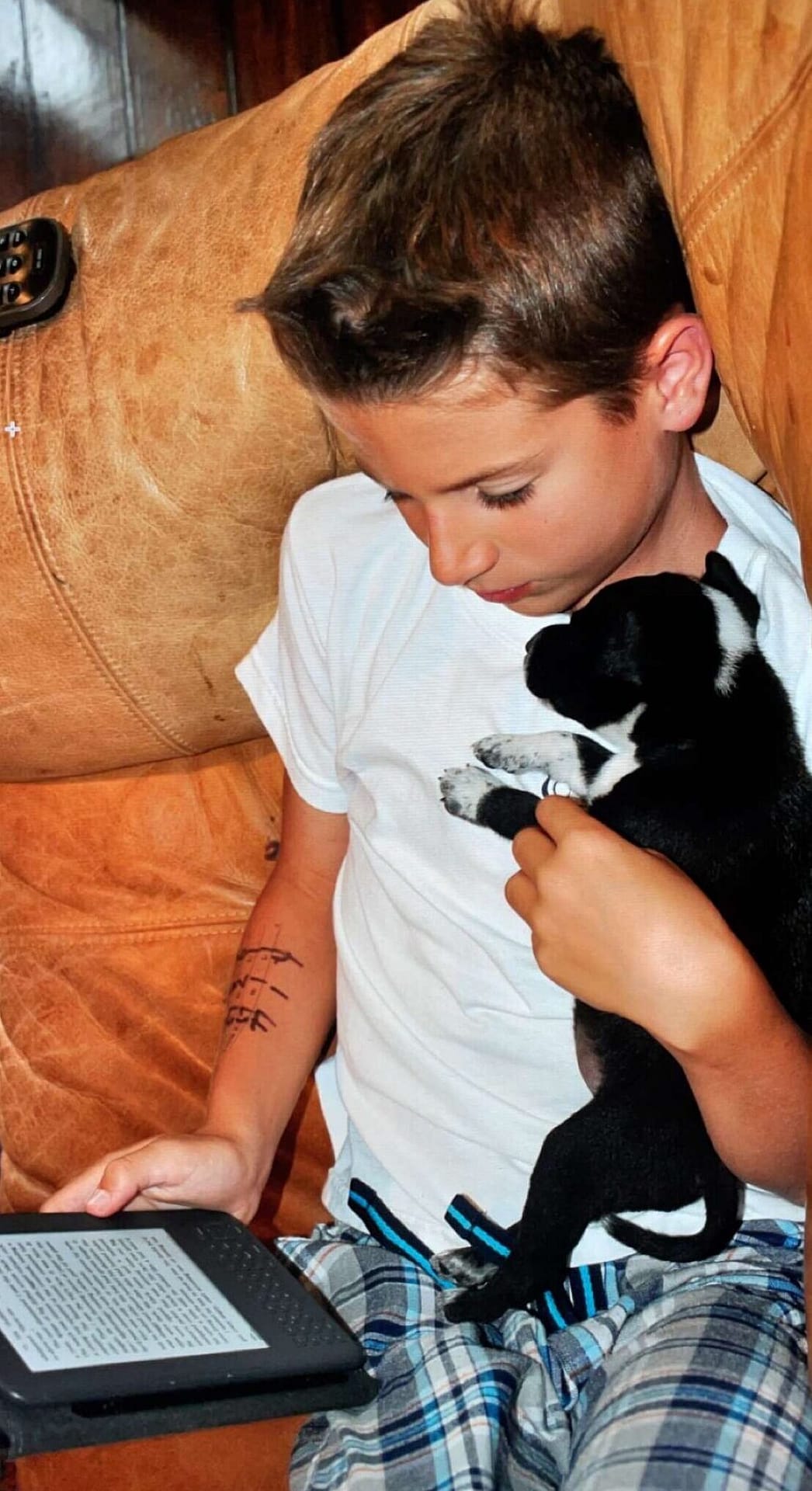
I never had a video game console growing up (and still thank my parents for that). So when I wasn’t outside with my siblings, I was reading.
In elementary school, I remember reading military books with some questionable language, and my teacher emailed my mom to make sure they were “age-appropriate.” In middle school, I read under my desk so often that teachers started confiscating my books. By high school, I shifted to reading free Amazon classics on my phone.
I read across every genre. If you scroll through my reading history, you’ll find military history, sci-fi epics, travel memoirs, existential fiction, Mexican short stories, and everything in between.
Books are people’s life work. If someone spends hundreds of hours shaping ideas, stories, and experiences into words, I think it’s worth paying attention to what they discovered.
This site is where I try to do that in a more intentional way.
learning from literaturewhat’s on this site.
I started Learning From Literature in my college dorm while majoring in Financial Planning, which mostly meant I had no idea how to build a website. Everything here is the result of figuring it out as I went.
The goal of this site isn’t to review books. It’s to capture the core idea each one leaves behind.
Over time, the blog has become a mix of everything I enjoy about reading and thinking through literature:
- Life: reflections on how ideas from books apply to everyday life
- Worlds: deeper dives into individual works like Dune or Ficciones
- Reading: thoughts on literature and the act of reading itself
- Lists: curated recommendations and themed reading lists
- Notes: short, bullet-style ideas worth keeping from nonfiction books
Each section is just a different way of looking at the same thing — how books shape the way we think.

A lot of the site’s visuals are thanks to Tindol, who has a much better eye for aesthetics than I do. All the photos on this site are taken by one of us.
on reviewswhy i don’t give ratings.
Books take time to digest. Sometimes I’ll think a book is underwhelming — and then later, something in life reflects one of its ideas and it hits differently.
Plus: what are we rating? The prose? The plot? The ideas? The emotional impact? Each of us experiences these differently. A book can be slow, dense, or “difficult” but full of life-changing ideas. Do you average a 2.5 for style with a 5 for insight?
This blog is less about giving verdicts and more about giving context, so you can decide for yourself whether a book is right for you.
Reading, like all art, is deeply personal. One person might love a book for its prose, another for its plot, and another not at all — and none of them are wrong.
It’s also why I call myself a mood reader. If I’m tired, I’m not picking up a dense classic or anything in a foreign language. I might love it, just not right now.
I think a book is a complex work of art, and reducing it to a single number oversimplifies its depth.
faqsthings people ask.
-
A great book for me has three parts: a strong story, a distinct writing style, and something that expands my perspective.
I love sci-fi and classics. Think Dune, Foundation, and Red Rising mixed with Hemingway, Hesse, and McCarthy.
With nonfiction, I like books that change the way I think rather than just deliver information. A few examples are Meditations, Essentialism, and The Art of Spending.
-
I honestly don’t know. I started tracking books during my senior year of high school, and since then I’ve averaged around 100 books a year. But if you count everything from childhood, it’s definitely much more than that.
-
Physical books are still my favorite. I like the feel and intentionality behind a real book.
That said, the best format is the one that helps you stay consistent. I’ve read on my phone during class, a Kindle while traveling, and even public-domain PDFs online.
-
I think adapting a book is a lot like translation: the best stay true to the spirit of the original while becoming something new.
Most struggle because books and film do different things well. Books let you live inside someone’s thoughts in a way film usually can’t.
When adaptations do work, it’s because the creators understood the strengths of both mediums instead of trying to copy scene-for-scene. It’s hard to do well.
 glad you’re here.
start reading →
glad you’re here.
start reading →